New regime? New opportunities for housebuilders
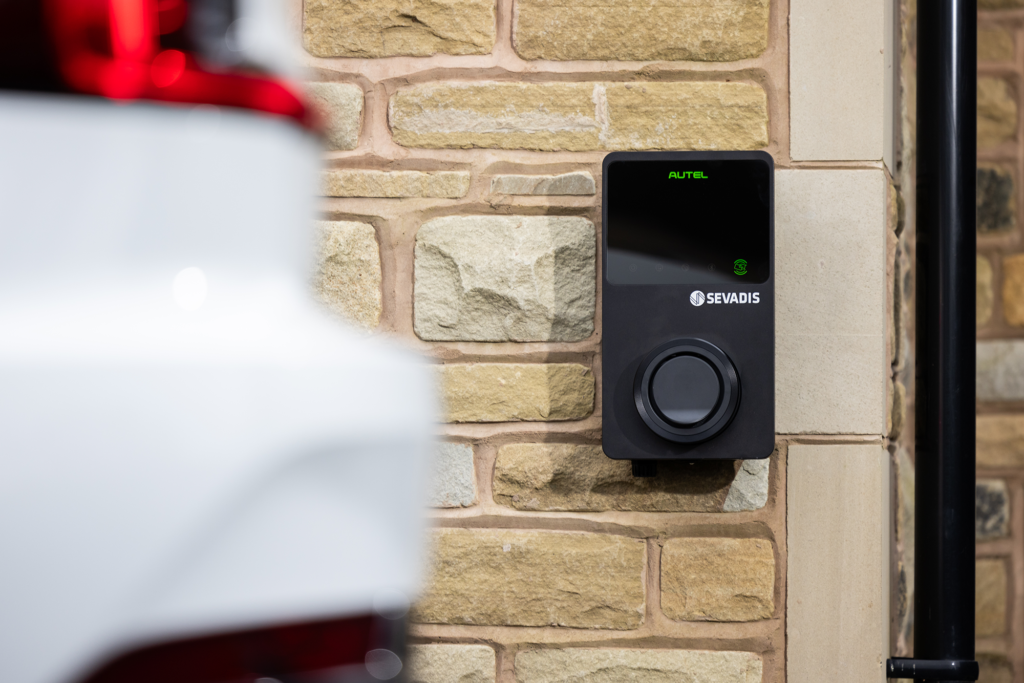
While incoming prime minister Andy Burnham has promised us the biggest house building programme ‘since the post-war period’, stringent regulations and a growing skills gap continue to hamper progress. In this article, Cris Chapman, managing director of Sevadis, highlights specific planning rules that may actually be slowing development, suggesting ways for housebuilders to turn regulation into revenue.
Whoever shapes the UK’s housing policy over the next decade faces the same challenge: increasing building output without compromising sustainability. With Labour maintaining its ambition to deliver 1.5 million new homes and planning reforms now in place to speed up development, attention is now turning to how these homes will be powered.
For many developers, regulations such as Part S of the Building Regulations, which requires EV charging infrastructure in new homes, have already added complexity and cost. The forthcoming Future Homes Standard is set to raise the bar further, making technologies such as heat pumps and solar PV increasingly commonplace.
Viewed individually, each requirement appears to be another compliance hurdle. Viewed collectively, however, they represent something far more valuable for developers – improved profit margins.
Together, EV chargers, rooftop solar, battery storage and low-carbon heating systems can form an integrated energy ecosystem that not only reduces emissions, but creates homes capable of generating, storing and intelligently managing electricity. Increasingly, these connected energy assets have commercial value.
From compliance to commercial opportunity
The organisations responsible for balancing Britain’s electricity network already spend hundreds of millions of pounds each year purchasing flexibility services from businesses and consumers that can reduce or shift electricity demand when required.
Aggregators are increasingly combining thousands of distributed energy assets into virtual power plants, allowing homeowners to participate in these flexibility markets while helping to stabilise the grid.
For developers, this presents an opportunity to move beyond simply installing compliant technologies. By designing homes that are digitally connected and energy-aware from day one, they can create developments that are better prepared for tomorrow’s electricity market while offering lower running costs and greater resilience for homeowners.
Flexibility matters
The case for energy flexibility has never been stronger. Renewable generation continues to grow, but unlike conventional power stations, solar and wind output naturally fluctuates. At the same time, the electrification of transport and heating is dramatically increasing demand for electricity.
Adding further pressure is the rapid expansion of AI-driven data centres, many of which are competing for the same grid capacity needed to support new housing developments. Across the UK, developers are finding that securing electricity connections has become one of the biggest obstacles to bringing new sites to fruition.
Recent industry research suggests that grid constraints are now delaying a significant proportion of residential developments, with some schemes requiring costly infrastructure upgrades before construction can even begin.
Rather than simply increasing grid capacity, intelligent energy management offers another solution. Intelligent load management enables electricity demand to be balanced across an entire development.
Instead of every EV charger operating at full power simultaneously, software automatically distributes available capacity where it is needed, ensuring overall demand remains within network limits.
Substantial financial benefits
On one 600-home development, Sevadis implemented a smart load management strategy that reduced overall infrastructure requirements sufficiently to remove the need for an additional electricity substation, saving around £200,000.
Savings like these demonstrate that energy infrastructure should no longer be viewed purely as a technical consideration. Indeed, it is increasingly becoming a commercial design decision. However, the greatest opportunities are often missed because energy technologies are introduced too late.
Many developers only begin considering EV charging, solar integration or battery storage once planning has progressed and electrical designs have already been completed. By then, opportunities to optimise infrastructure, reduce capital costs and improve long-term flexibility have largely disappeared.
Instead, EV charging specialists, renewable energy providers, electrical consultants and smart energy experts should be involved from the earliest stages of planning.
Treating energy as a fully integrated part of the development rather than a collection of separate technologies enables schemes to be designed around efficiency rather than compliance.
Building homes ready for tomorrow
Despite rapid progress, knowledge gaps remain across the sector. Successfully integrating EV chargers, solar PV, batteries, heat pumps and home energy management systems requires careful specification, particularly if homeowners are to benefit from emerging flexibility markets.
Standards such as the Open Charge Point Protocol (OCPP) are becoming increasingly important because they allow EV chargers to communicate with wider energy management platforms rather than operating as standalone devices. Without this interoperability, homeowners may find themselves unable to take advantage of smart tariffs, maximise self-generated electricity or participate in future grid services.
Meanwhile, technologies such as vehicle-to-home (V2H) and vehicle-to-grid (V2G) charging continue to mature. Although widespread adoption has been slowed by vehicle warranty concerns and limited manufacturer support, the direction of travel is clear. As automotive manufacturers increasingly embrace bidirectional charging, today’s developments will need infrastructure capable of supporting tomorrow’s energy ecosystem.
Connected homes kudos
Energy performance is becoming an increasingly important purchasing decision – and mandated by local councils obliged to hit renewable targets. Research has shown that so-called “zero-bill” homes (designed to generate and intelligently manage enough renewable energy to offset household electricity costs) can command significant price premiums while appealing to buyers and councils seeking protection from future energy price volatility.
For developers, this represents a fundamental shift. The cheapest compliant solution may satisfy today’s regulations, but it risks creating homes that quickly become outdated as the energy system evolves.
By contrast, developments designed around flexibility, connectivity and intelligent energy management are likely to retain greater value, appeal to increasingly energy-conscious buyers and provide homeowners with access to new revenue opportunities as flexibility markets expand.
Beyond compliance
Regulation is undoubtedly changing residential development. But the biggest opportunity may not lie in meeting today’s requirements. It lies in recognising that mandatory technologies such as EV chargers, solar PV and smart energy controls are rapidly becoming valuable infrastructure in their own right.
Housebuilders that embrace this shift will not simply deliver compliant homes. They will create developments that are more resilient, more attractive to buyers and better connected to the future energy system.
In that sense, energy flexibility is no longer simply about balancing electricity demand. It is becoming a commercial strategy that can strengthen development viability, enhance customer value and create entirely new sources of long-term revenue.
For more information about Sevadis and its next-generation EV charging solutions, visit www.sevadis.com.